

The future of brand consistency is not saying the same thing everywhere. It is behaving like the same character everywhere.
Something unusual happened during the 2026 World Cup. Before England played Norway in the quarter-final, Norwegian challenged British Airways to a wager. Whichever national team lost, its airline would replace its Instagram profile picture with the rival airline’s logo for 24 hours.
British Airways accepted.
The two competitors traded jokes, publicly shook on the bet, and invited the internet into the rivalry. Other airlines joined the conversation. England eventually won 2–1, and Norwegian did what it had promised: for a day, one airline wore the identity of another.
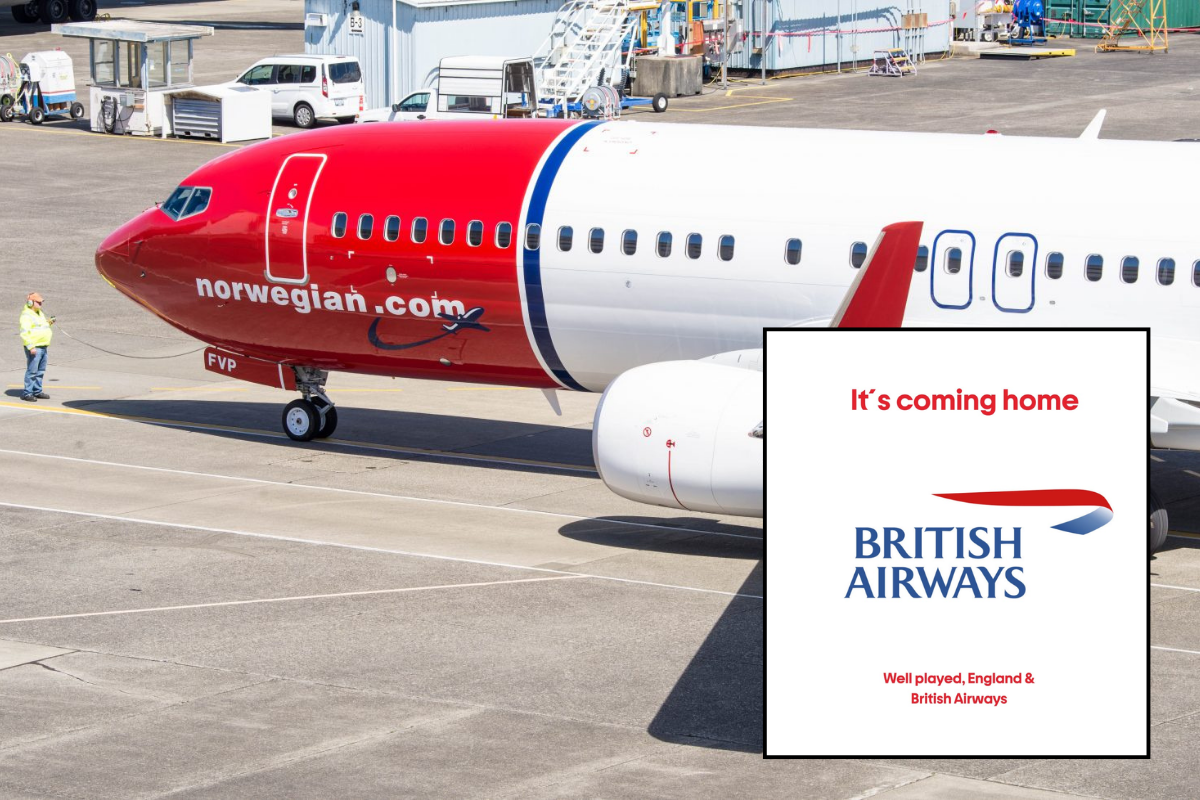
From a traditional brand-management perspective, the whole thing was slightly absurd. A logo is one of the most protected assets a company owns. Competitors are normally kept apart. Communication is planned. Brand identity is governed through rules designed to ensure consistency and minimize risk. Yet for a brief moment, two airline brands felt unusually alive. Not because their logos changed. Because they behaved.
They challenged each other. Took a risk. Played. Responded. Remembered the agreement. Accepted the consequence. There was uncertainty in what would happen next. And people wanted to watch. That raises a larger question.
What if the next evolution of brand is not about what a brand says or looks like, but about its capacity to participate?
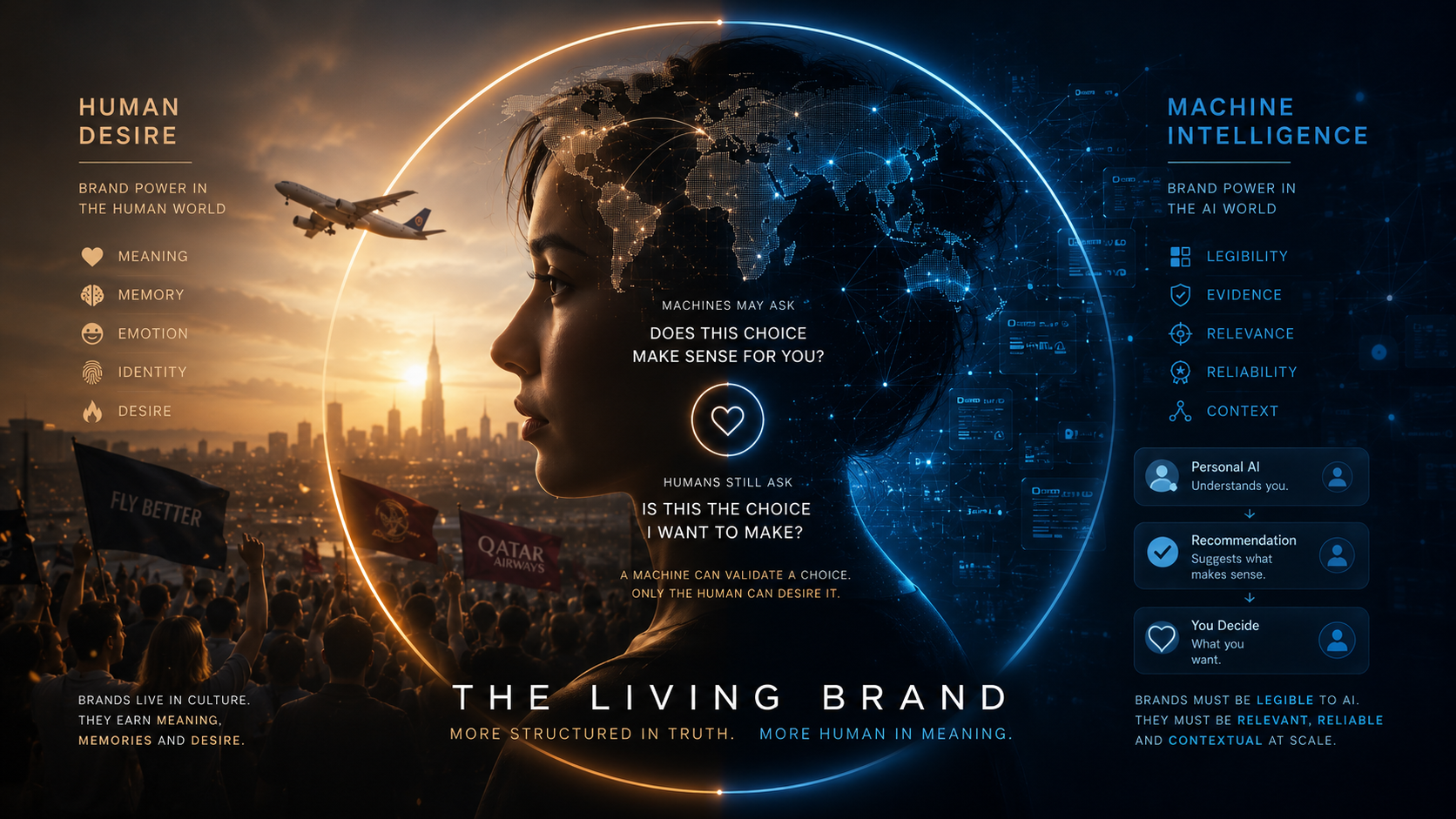
We believe this question becomes much more important in the age of AI. Because AI is giving brands something they have never had at scale before: the capacity to sense, understand, remember, respond and eventually act.
The challenge is no longer simply how to make a brand consistent. It is how to make a brand capable of movement without losing itself. That is the idea of the Living Brand.
From Brand Expression to Brand Participation
For most of modern marketing, the brand has primarily been an object of expression. The company creates something. The audience receives it.
A television commercial. A billboard. A social post. A product launch. A sponsorship. A campaign.
Even as digital technology made communication interactive, much of brand management retained the same underlying architecture: Brand → Audience
The brand speaks. People respond.
But some of the most interesting brands have already moved beyond this model.
They enter conversations. They create rituals. They host communities. They play with competitors. They collaborate with other brands. They allow customers to create with them. They react to events they did not create. Sometimes, importantly, they choose not to react at all.
The relationship begins to look less like broadcasting and more like participation: Brand ↔ People ↔ Culture ↔ Community
The brand is no longer merely represented in the world. It begins to behave within it.
A Living Brand Is Not Simply a Responsive Brand
This distinction matters.
Oreo's famous response to the blackout during the 2013 Super Bowl is often remembered as a triumph of real-time marketing. When the stadium lights went out, the brand quickly published the now-famous “You can still dunk in the dark” message.
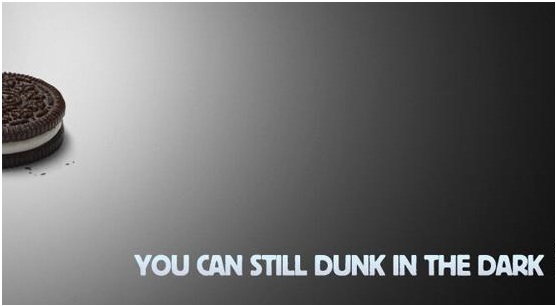
The visible output was a post. The more interesting story was the system behind it. Oreo had creative, strategy and decision-making capability assembled around the event, allowing the brand to recognize an unexpected moment and act while that moment was still culturally alive.
The lesson is not simply:
Brands should respond faster.
It is:
A brand can only behave spontaneously when the organization behind it has prepared for spontaneity.
That requires more than a tone-of-voice document. It requires judgment. Decision rights. Clear boundaries. Cultural sensitivity. A shared understanding of character. And enough organizational trust to act before the moment disappears.
This distinction will become even more important with AI. Because response speed is about to become cheap. Judgment will not.
From Brand Voice to Brand Character
Marketing has spent years developing the idea of a brand voice.
How should the brand sound? Friendly or authoritative? Serious or playful? Provocative or reassuring?
This was useful when the primary unit of branding was communication. But participation requires something deeper. The question becomes:
How would this brand behave?
Duolingo offers an interesting example.
Its green owl has evolved far beyond a visual mascot or recognizable tone of voice. Across social platforms, Duo has developed behavior, relationships, recurring jokes and a history that audiences recognize. The character exists across episodes rather than isolated pieces of content.
The result is something closer to brand lore. A voice tells us how a brand speaks. A character tells us how it behaves. Lore gives that character a past, relationships and the possibility of a future.
This distinction matters because humans do not build relationships with other people based on tone consistency alone. We learn who someone is by observing how they behave across different situations. Brands are increasingly being judged in the same way.
A Living Brand Allows the World to Affect It
There is another threshold that separates participation from communication. A brand is not truly participating if every interaction changes the audience but never changes the brand. LEGO Ideas offers a useful example.
Fans can submit ideas for new LEGO sets, support ideas created by others, and help determine which concepts progress toward formal review. Ideas that reach the required support threshold can ultimately become official LEGO products. LEGO Ideas
The community is not simply reacting to the brand. It can alter what the brand produces next. That creates a fundamentally different relationship. Traditional marketing often imagines value flowing outward: Company → Product → Consumer
Community systems allow value to circulate: Company ↔ Community ↔ Members
The company creates value for the community. The community creates value for its members. Members create value for one another. And eventually, some of that value returns to change the company itself. That reciprocity is an important characteristic of anything we would meaningfully call “living.”
A brand is not truly alive if every interaction changes the consumer but never changes the brand.
Sometimes the Brand Becomes a Mirror
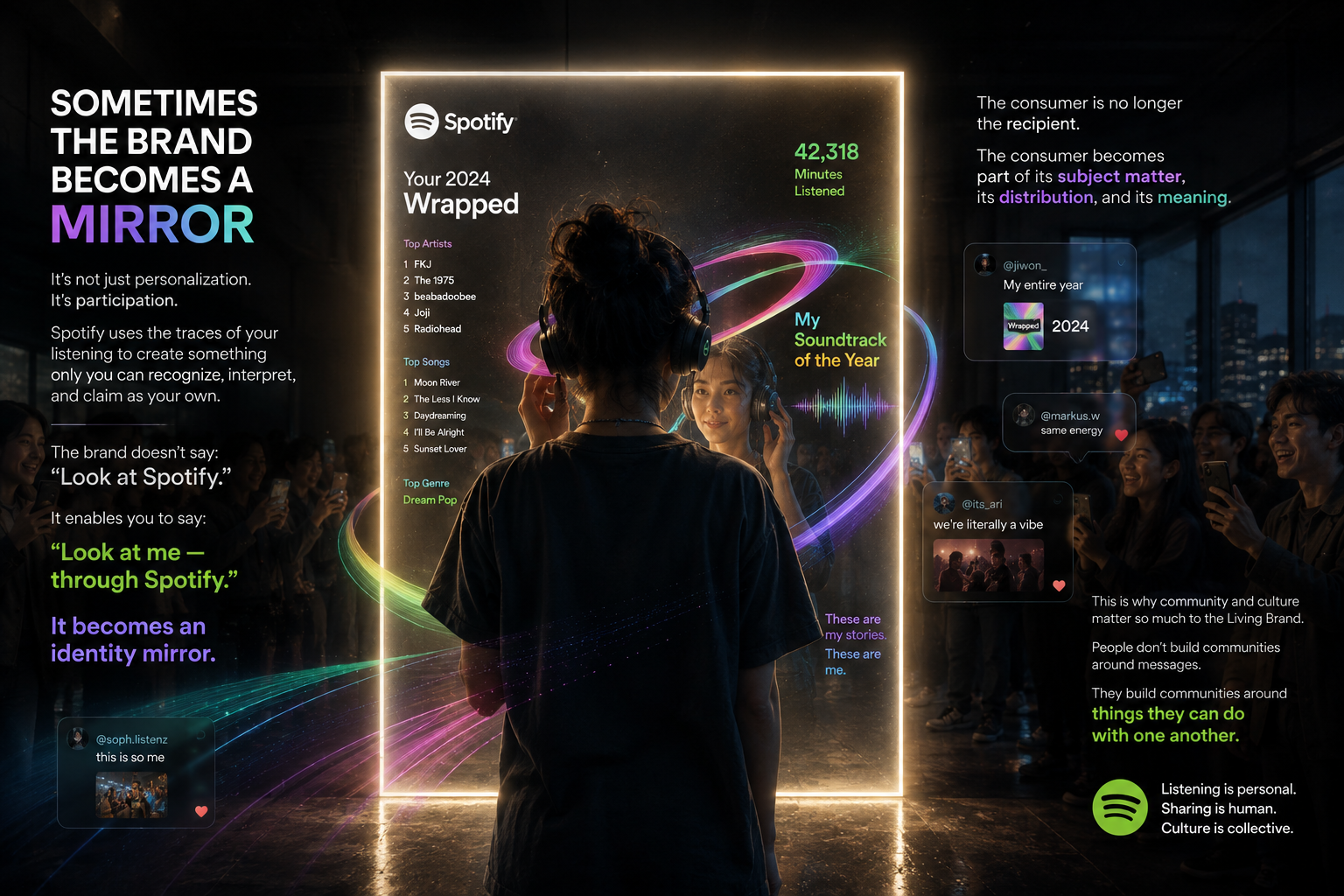
Spotify Wrapped demonstrates another form of participation. Its power is not simply personalization. Spotify uses the traces of people's own listening behavior to create something they can recognize, interpret and share as part of their identity. The brand does not merely say:
Look at Spotify.
It enables the individual to say:
Look at me — through Spotify.
That is a fundamentally different role for a brand. It becomes an identity mirror. The consumer is no longer merely the recipient of the communication. The consumer becomes part of its subject matter, its distribution and its meaning. This is one reason community and culture matter so much to the Living Brand. People rarely build communities around messages. They build communities around things they can do with one another.
The Brand Does Not Always Need to Be the Center
This becomes even clearer when brands enter physical communities.
Nike's running initiatives, for example, do more than place the Nike identity in front of runners. Training, coaches, local running groups and shared events create environments in which participants generate value for one another.
The brand enables the relationship. It does not need to dominate it.
The same principle can be seen in cultural initiatives such as Miu Miu's Literary Club and Summer Reads, where the fashion house creates spaces around literature, ideas and contemporary cultural questions rather than simply turning every encounter into a conversation about clothing. Miu Miu Literary Club
This suggests a more useful question than:
What content should our brand create?
The better question may be:
What role does our brand have the right to play in people's lives and communities?
Entertainer. Host. Coach. Challenger. Facilitator. Collaborator. Provocateur. Helper.
Different brands have different rights to participate. And having the capability to enter a conversation does not mean having permission to do so.
Participation Requires Permission
This is one of the limits that enthusiastic ideas about “human brands” often ignore. A brand cannot simply walk into every cultural space and declare itself part of the community.
Communities have norms. Histories. Relationships. Status systems. Inside jokes. Boundaries.
A brand that enters only to extract attention is usually recognizable very quickly. The principle is simple:
Participation requires contribution.
A Living Brand therefore needs to understand not only how to participate, but whether it belongs there at all. What can we contribute? Why would people want us here? What role are we entitled to play? When are we useful? And when should we remain silent?
The ability not to speak may become one of the most important signs that a brand actually has character.
Collaboration Is a Relationship, Not a Media Buy
The same logic changes how we should think about brand collaborations. Too many collaborations are still evaluated through a simple equation: Brand A's audience + Brand B's audience = more reach
But the most interesting collaborations do something else. They exchange meaning. One brand brings something culturally or symbolically different from the other. The encounter produces a third meaning that neither could create alone. In that sense:
Meaning A × Meaning B → Meaning C
This helps explain why unexpected collaborations can sometimes transform how a product or company is perceived.
Crocs, for example, has collaborated across worlds ranging from luxury fashion to music and popular culture. These partnerships did more than generate impressions. Over time, they helped turn a product once widely treated as aesthetically questionable into a platform for identity, irony, fashion and cultural play.
A Living Brand does not collaborate simply because collaboration is fashionable. It forms relationships. And, much like a person, those relationships reveal something about its identity. Who you choose to stand beside says something about who you are.
Then AI Changes the Scale
None of these behaviors began with AI. Brands have been participating in culture, communities and relationships for years. AI changes something else: the possible scale and continuity of participation.
Until now, brand responsiveness has been constrained by human capacity. There are only so many conversations a social team can understand. Only so many cultural moments a brand can evaluate. Only so many customer interactions a person can remember. Only so many variations a creative team can produce. Only so many decisions an organization can make in real time.
AI begins to loosen those constraints.
A brand can increasingly listen across thousands of signals, interpret context, recognize intent, retrieve knowledge, remember previous interactions, generate appropriate expressions and potentially take actions through AI systems.
The shift is not simply: Slow Brand → Fast Brand
It is potentially:
Campaign Brand → Continuous Brand
A campaign has a beginning and an end. A relationship does not.
From Campaign Memory to Relational Memory
Imagine interacting with a brand at 11:37 at night. You ask a very specific question in Vietnamese. About a product you considered three months earlier. The brand understands what you mean, remembers the relevant context, knows what has changed since your previous interaction and continues the relationship from there.
That is not simply personalization. It is continuity. Historically, brands have had enormous institutional memory but remarkably little relational memory.
The company may know everything about its products, policies and customers in aggregate, yet each interaction often begins as though the two parties have never met.
AI can change that. The brand begins to move from: Campaign Memory
toward:
Relational Memory
It can remember not only what it wants to say, but potentially what has happened between us before. That creates an entirely different kind of brand relationship.
From Communication to Agency
AI may eventually push this even further. In Building Brands for Two Minds, we argued that AI creates another interpreter between brands and consumers. Personal AI systems may increasingly help people discover, compare and evaluate choices.
But AI can exist on the brand side as well. The future interaction may therefore not always be: Brand → Human
It may increasingly become: Human ↔ Personal AI ↔ Brand AI ↔ Commerce / Service / Community
At that point, the brand does more than communicate. It begins to acquire some capacity to act:
Help me configure this. Find the right product. Resolve the problem. Remember my preference. Arrange the service. Negotiate the options. Connect me with the right community. Adapt what happens next.
The brand moves from symbolic presence toward operational presence. This is where the idea of the Living Brand becomes much more consequential.
But Responsiveness Is Not Life
There is a danger here. AI makes it remarkably easy for brands to simulate the appearance of being alive. Respond everywhere. Personalize everything. Comment instantly. Recognize every trend. Imitate humor. Generate endless variations. Remember every interaction. Always have something to say. We should not confuse this with life.
Being constantly responsive is not the same as being alive.
A chatbot available 24 hours a day is not necessarily a Living Brand. A company commenting on every meme is not necessarily culturally relevant. A system that perfectly predicts the statistically appropriate response may still have no character whatsoever. AI therefore creates the possibility of something we might call:
Synthetic Liveliness
Responsive, but characterless. Personalized, but impersonal. Present everywhere, but belonging nowhere. Human-sounding, but meaning nothing.
And paradoxically, the more capable AI becomes at producing appropriate responses, the easier it may become for brands to disappear into an ocean of perfectly competent sameness.
The problem is no longer generating the response. The problem is knowing what kind of self is responding.
The Living Brand Needs a Stable Self
Anything capable of adapting needs something that does not adapt. Otherwise, adaptation becomes drift. This is why the future of brand consistency cannot simply mean making every expression look or sound alike. As the number of possible interactions approaches infinity, controlling every expression becomes impossible.
What must remain coherent is deeper. The brand needs a stable understanding of its truth, meaning, values, character, distinctive signals and boundaries. Around that stable center, behavior can become much more adaptive.
Different contexts may require different responses. Different communities may require different roles. Different people may require different forms of help. Different cultural moments may invite different behaviors.
The expression changes. The character does not. This leads to what we believe is a more useful definition of consistency for the AI era:
The future of brand consistency is not saying the same thing everywhere. It is behaving like the same character everywhere.
That character does not need a script for every possible situation. It needs principles strong enough to know what to do when the script runs out.
From Brand Guidelines to a Brand Operating System
Traditional brand guidelines were designed primarily to govern expression. How the logo appears. Which colors are allowed. How photography should look. What language the brand should use. How the brand should sound. Those systems remain useful.
But a Living Brand needs another layer. If the brand can respond, remember and act, leadership must define more than how it communicates. It must define:
What does this brand notice? What does it care about? What kinds of situations should it enter? What can it contribute? How does it behave under pressure? What can it joke about? What will it never joke about? What can AI decide autonomously? What requires human judgment? What should the brand remember? What should it forget? When can it act? When must it ask? When should it remain silent?
This is not simply a larger brand guideline. It is closer to a:
Brand Operating System
A system that protects a stable identity while allowing adaptive behavior. The stronger the center, the freer the brand can move. This is the same principle we previously expressed as:
Fix the Meaning. Free the Expression.
For the Living Brand, it goes one step further:
Fix the Character. Free the Behavior.
Not unlimited behavior. Bounded behavior. Freedom inside a coherent identity.
The Evolution of Brand
Seen this way, the history of branding begins to look like a gradual expansion of what a brand is capable of being.
Brand as Object
Look consistent.
The brand primarily identifies and distinguishes.
Brand as Message
Say something distinctive.
The brand owns ideas and associations.
Brand as Experience
Deliver what you promise.
The brand becomes the accumulated consequence of interactions.
Brand as Participant
Enter culture and relationships.
The brand responds, hosts, collaborates and co-creates. And now AI makes another possibility operational at a scale we have never had before.
Brand as Living System
Know who you are. Understand where you are. Remember who you are with. Act accordingly.
The brand has a stable self. It can sense context. It can maintain relational memory. It can adapt its expression. It can participate. And within carefully defined boundaries, it can increasingly act. That is much closer to something living than anything traditional brand management was designed to govern.
The Hard Part Will Not Be Making Brands Move
AI can give a brand almost infinite ways to respond. That will become increasingly easy. It can help brands listen faster, understand more context, remember more interactions, generate more expressions and participate across more moments than any human organization could manage alone. But none of those capabilities answer the hardest question:
Who is responding?
AI can make a brand infinitely responsive. Only identity can make those responses mean something. This is why we do not believe the Living Brand is a brand pretending to be human. It is something more disciplined than that.
A Living Brand is coherent enough to act without a script, responsive enough to change with context, and disciplined enough to remain itself while doing so. AI will make the first two increasingly easy.
The third will become the real work of brand leadership. Because in a world where every brand can speak, respond, personalize and act at extraordinary speed, the advantage will not belong to the brand that moves the most. It will belong to the brand whose every movement makes its identity more recognizable, not less.
Stay alive. Stay yourself.
— IICS